How AI Legal Assistants Transform Research, Case Analysis, and Drafting

Modern AI legal assistants empower your law firm to elevate the accuracy, efficiency, and consistency of your legal research, case analysis, and drafting. They provide secure, verifiable, and integrated intelligence that augments your attorneys' expertise within your firm's controlled environment. These advanced platforms are not about replacing your legal professionals but about enhancing their capabilities. By automating high-effort tasks, AI assistants free up your legal talent to focus on strategic counsel and complex problem-solving where human judgment is irreplaceable.
What Are AI Legal Assistants and How Do They Augment Law Firms?
Specialized legal AI assistant software augments your firm's expertise by automating high-effort tasks like document review and providing rapid access to critical information. Engineered specifically for the legal domain, the software acts as a force multiplier for your lawyers, handling the meticulous work that underpins high-level strategy. This targeted design ensures the outputs are relevant and reliable for legal practice.
The primary role of these assistants is to improve the speed, consistency, and comprehensiveness of your firm's work across research, analysis, and drafting. An AI assistant can review thousands of documents in minutes, a task that could take associates days. This acceleration allows your teams to respond to client needs more quickly and maintain a consistent standard of work product across the entire firm.
The core principle behind this technology is augmentation. AI is exceptionally well-suited to handle routine, time-intensive work, freeing your attorneys to redirect their focus toward high-value strategic counsel and nuanced legal reasoning. This partnership between lawyer and AI allows you to scale your firm's most valuable asset: its collective expertise.
The Core Components of a Legal AI Assistant
The best legal AI assistant must be built on domain-specific training data, grounded in a vast and updated database of primary legal sources to ensure accuracy and reliability. General AI models lack a nuanced understanding of legal terminology and precedent. A purpose-built legal AI is trained specifically on curated legal information, which dramatically reduces the risk of generating irrelevant outputs. This foundation is essential for producing work product you can trust.
A leading platform delivers jurisdiction-specific outputs and plain-language responses, making its intelligence immediately usable. A lawyer in California requires analysis based on California's rules, not New York's. A sophisticated AI legal assistant understands and applies these jurisdictional nuances. Presenting this complex information in clear, concise language allows your attorneys to quickly grasp key points and integrate the AI’s output into their work.
The best solutions offer an integrated platform that connects workflows, allowing you to move seamlessly from a research query to a drafted document within a single environment. A fragmented process requiring you to switch between different tools introduces friction. An integrated system enables a fluid transition from research to analysis to drafting, creating a cohesive user experience that mirrors the natural flow of legal work.
Revolutionizing Legal Research: How AI Assistants Enhance Discovery and Analysis
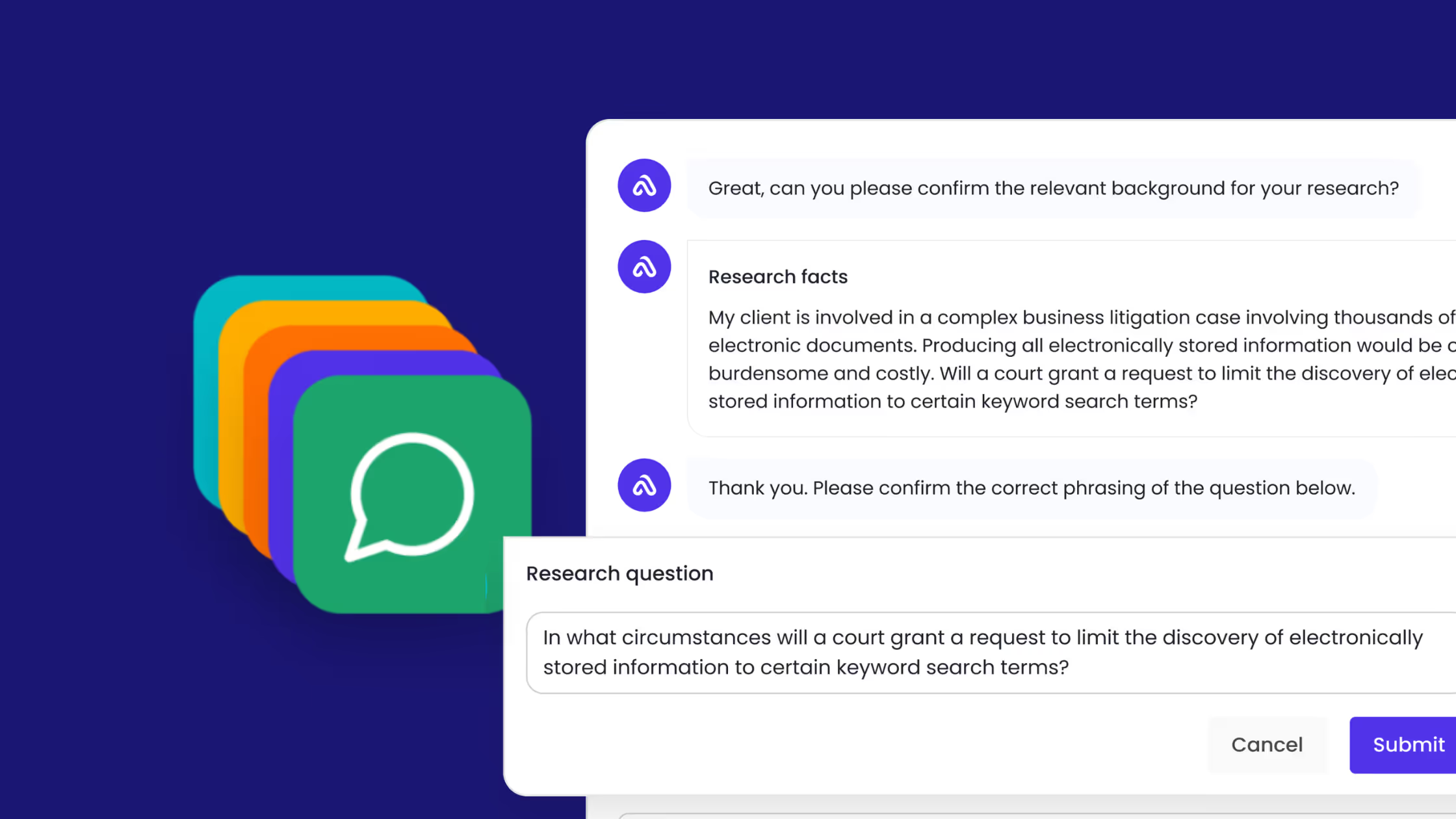
AI significantly accelerates your discovery process by rapidly identifying relevant statutes, binding case law, and key secondary sources. Instead of manually sifting through countless search results, your lawyers can use AI assistants to ask complex questions in natural language and receive targeted answers. The AI scans millions of documents to pinpoint pertinent authorities, saving immense time.
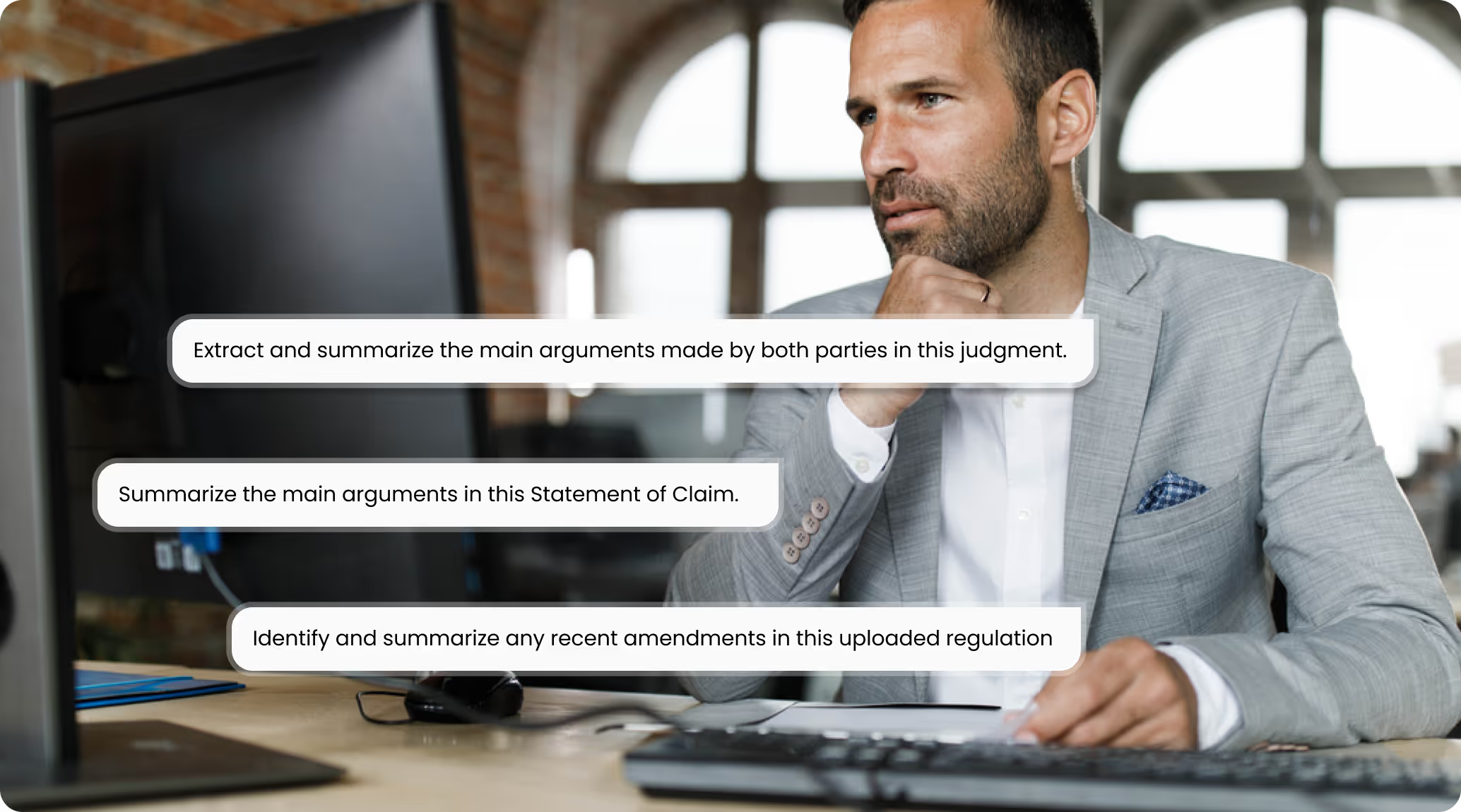
These platforms can also synthesize complex legal information, summarize arguments, and surface key precedents to inform your legal strategy. An AI assistant can quickly generate summaries of lengthy judicial opinions or identify central arguments made by opposing counsel. This synthesis provides your lawyers with a high-level overview of the legal landscape, enabling them to develop case strategy from a more informed position.
Ultimately, AI provides a powerful starting point for research, with your attorney always providing critical oversight, verification, and final analysis. The AI's role is to deliver a well-organized set of materials and initial conclusions. It is your lawyer's responsibility to then apply their professional judgment to verify sources, interpret legal nuances, and craft a compelling argument.
Elevating Case Analysis: From Document Review to Strategic Insights with AI
AI plays a crucial role in managing high-volume document review by accurately identifying key facts, entities, timelines, and relationships within large datasets. In complex litigation or due diligence, an AI legal assistant can process this information with incredible speed and precision, transforming unstructured data into a structured format that is easy for your team to navigate.
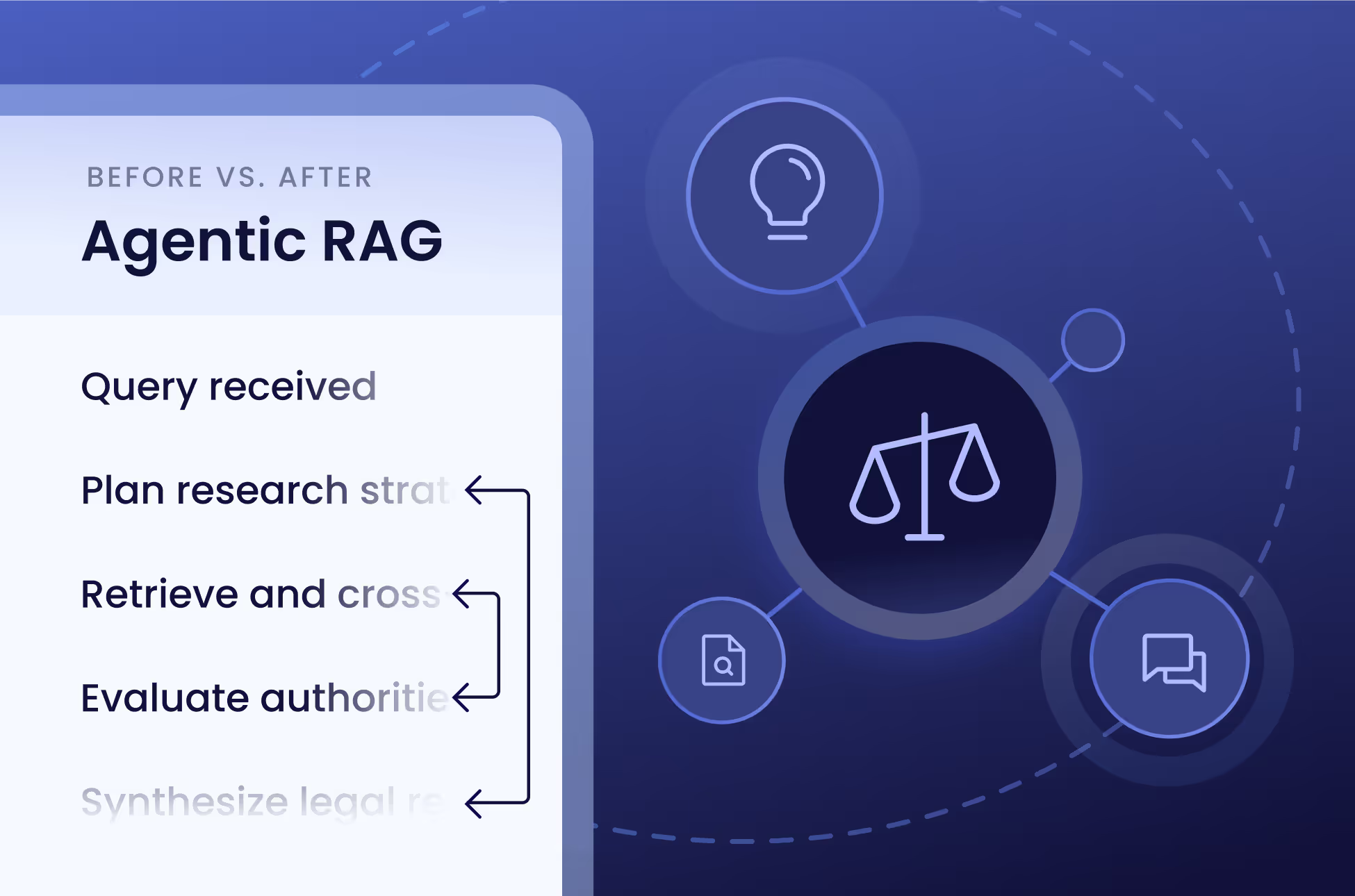
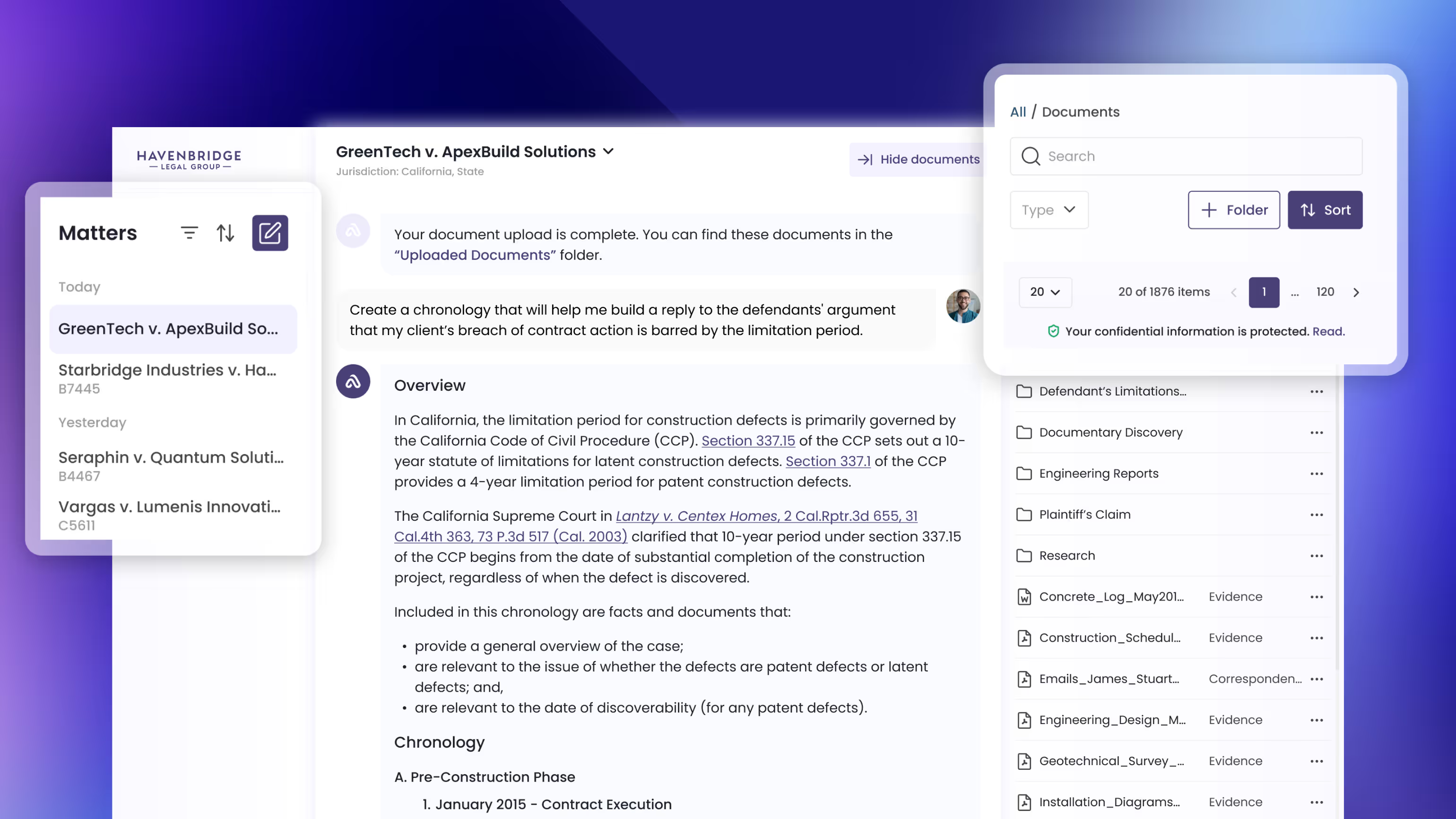
Through automated workflows, AI can assist in generating case chronologies, evidence summaries, and initial risk assessments. Once key information has been extracted, the AI can assemble it into a coherent narrative, such as a timeline of events based on email chains. This structured output gives your legal teams a clear and organized view of the case facts.
By structuring vast amounts of information, these tools help your legal teams develop a deeper understanding of case nuances, empowering more informed and proactive strategic decisions. The AI handles the logistical challenge of organizing the data, allowing your lawyers to dedicate their cognitive energy to the higher-level task of building the case.
Accelerating Legal Drafting: AI for Memos, Contracts, and Standardized Documents
AI assistants can generate high-quality initial drafts of legal documents, including internal memos, court submissions, and complex contracts, based on your firm's standards. By leveraging your existing knowledge base and precedent library, these tools produce a robust first version of a document tailored to your firm's style, significantly reducing time spent on routine drafting.
Capabilities like clause extraction and precedent analysis ensure consistency and adherence to your specific drafting requirements. When drafting a contract, an AI assistant can pull approved clauses from your firm’s library or analyze past agreements to suggest appropriate language. This ensures every document meets your quality standards and incorporates best practices.
The technology provides a robust foundation for drafting, which your attorneys then refine and customize to meet specific client needs. The AI-generated draft is an advanced starting point, not the final product. Your lawyer applies their expertise to tailor the document, negotiate terms, and ensure it perfectly aligns with the client's unique situation.
Mitigating AI Hallucinations: Building Trust and Verifiability in Legal AI Outputs
Trustworthy AI legal assistants mitigate the risk of "hallucinations" by grounding all outputs in verifiable primary legal sources and incorporating direct, transparent citations. The risk of fabricated information is a critical concern, particularly with general-purpose AI models. Purpose-built legal AI solves this by operating within a closed-world database of primary law.
This foundation ensures that every assertion or legal proposition the AI makes is directly traceable to an authentic source, with clickable links that allow for your immediate verification. This creates a transparent, auditable system that builds trust. An effective legal AI platform is designed to facilitate, not bypass, attorney review. This human-in-the-loop approach ensures the AI’s output is rigorously checked for accuracy and context before it is ever used in a client matter.
Ensuring Data Security and Governance: The Foundation for Trusted Legal AI
For handling sensitive client information, private-cloud deployments and data isolation are non-negotiable requirements to maintain confidentiality and privilege. A private cloud environment ensures your firm's data is completely segregated from other customers, preventing data leakage or unauthorized access. This is fundamental to upholding your duty of confidentiality.
Demand enterprise-grade security controls and independent compliance audits, such as SOC 2, to protect firm and client data. A vendor's claims of security are not enough; they must be validated by respected third-party auditors. A SOC 2 certification demonstrates that a provider has established and follows strict information security procedures.
A robust data governance framework, aligned with standards like the NIST AI Risk Management Framework , gives you full control over your data. You should remain the sole owner of your data, with the ability to dictate how it is used, processed, and stored by the AI platform.
Ready to see how a secure, verifiable AI legal assistant can transform your firm's workflows?
Book a consultation to explore how you can augment your team's expertise and deliver exceptional client outcomes.
Blogs you might be interested in:

.jpg)


.png)
.avif)
.avif)
.avif)



.avif)

.jpeg)

%2520(1).jpeg)


.avif)

.avif)
.avif)

.avif)
.avif)

.avif)
.avif)


.avif)

.avif)







.avif)



-min%25252520(1).avif)
















Firm-wide legal intelligence.
In your control.
Meet with our team to explore how Alexi can be deployed privately for your firm — secure, isolated, and tailored to your workflows.